How many tiles do I need?
Measure, add a little extra, round up to full boxes. Here's how to get it right the first time.
4 min read
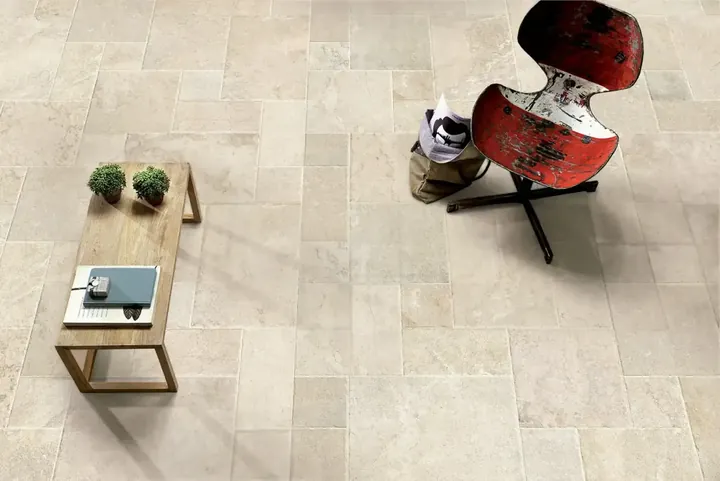
Measure the area
For a floor, measure the length and width of the room in metres and multiply them. A room 4 m by 3.5 m is 14 m².
For an L-shaped room, split it into rectangles, work out each one and add them together. For walls, multiply the width of each wall by the height you're tiling to, then take off large openings like windows and doors.
Add extra for cuts and breakages
Tiles get cut at every edge, and the odd one breaks. Add 10% for a straight or brick layout. Add 15% for herringbone, chevron or diagonal layouts, because they create more offcuts.
In our example, 14 m² plus 10% is 15.4 m².
Round up to full boxes
Tiles are sold by the box, and each box covers a set area. Many 600 x 600 and 300 x 600 ranges come at 1.44 m² a box, so 15.4 m² needs 11 boxes (15.84 m²). Always round up.
Buy it all at once
Tiles are made in batches, and the shade can shift slightly from one batch to the next. Buying everything together keeps the floor even. Keep a few spare tiles for future repairs.
Don't forget what goes under and between
You'll also need adhesive and grout, and possibly primer, trims and tile levelling clips. Adhesive use depends on tile size and trowel, so tell us your tile and we'll work out the bags with you.